Noboribetsu Jigokudani (Hell Valley): Hokkaido’s Most Fascinating Volcanic Landscape
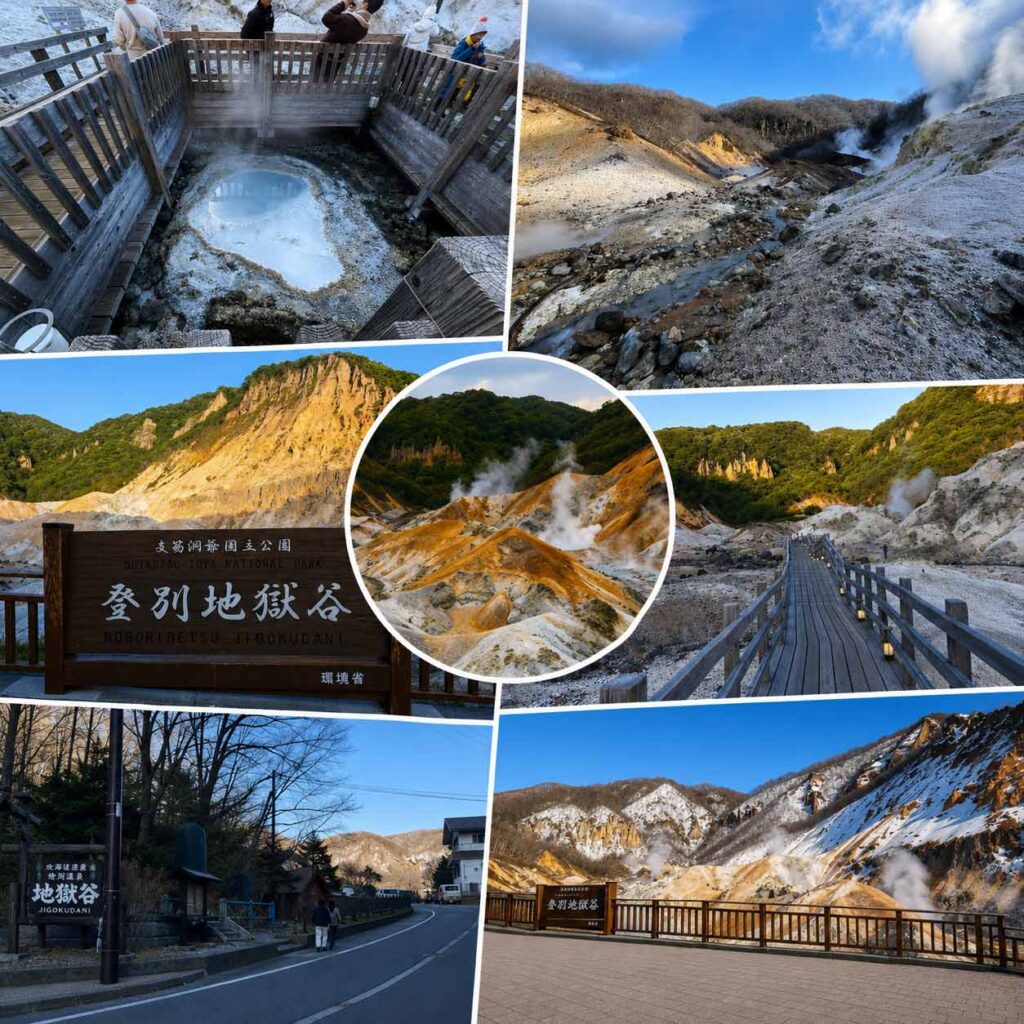
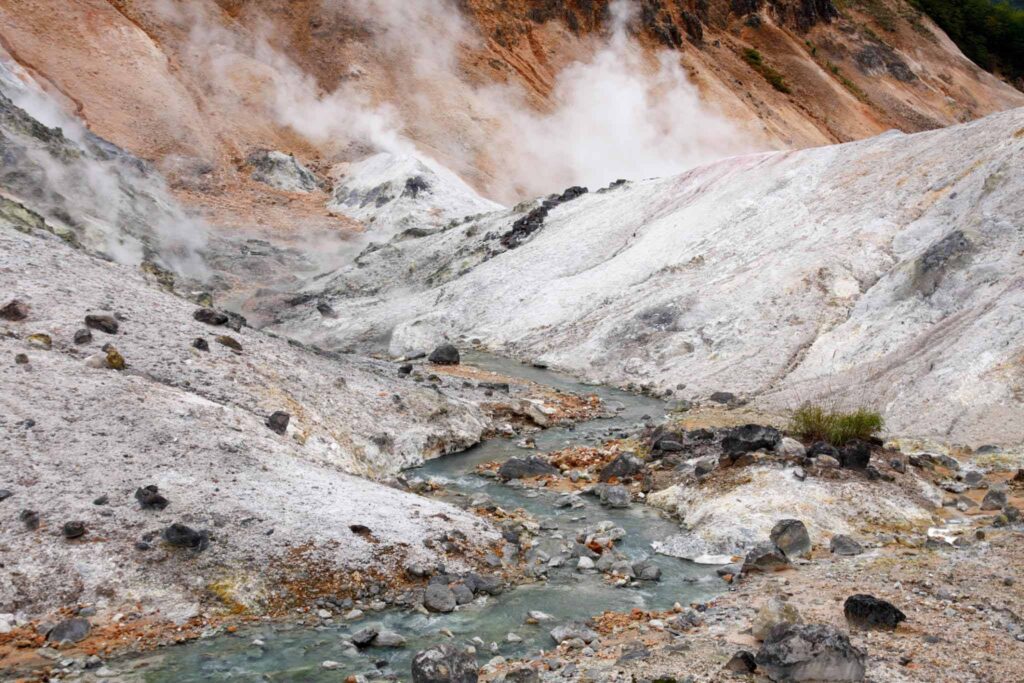
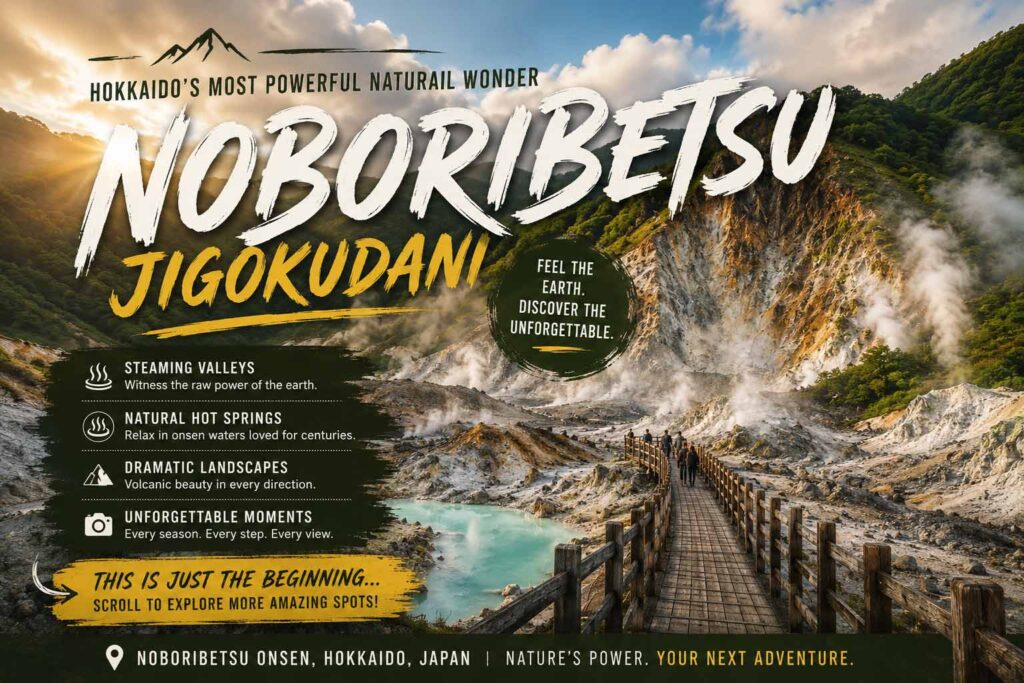
Steam rises from the earth. Sulfur drifts through the air. Gray and orange mountains seem to glow against the surrounding forest. At first glance, Noboribetsu Jigokudani looks more like another planet than a destination in Japan.
Located in southwestern Hokkaido, this remarkable geothermal valley is one of the most famous natural attractions in the region and the heart of Noboribetsu Onsen, Hokkaido’s best-known hot spring town.
What Is Noboribetsu Jigokudani?
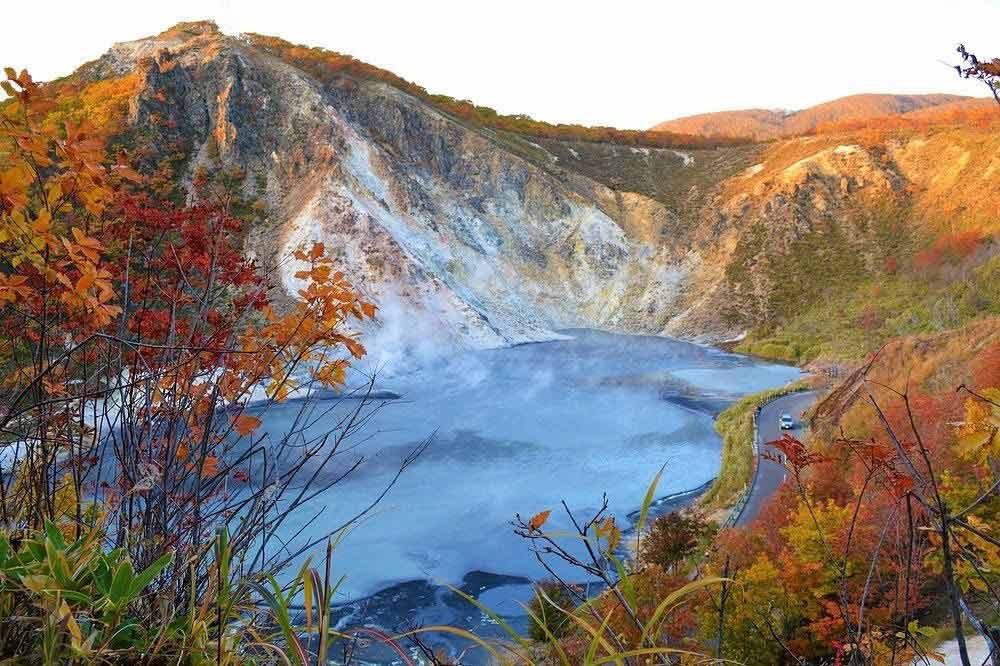
The name “Jigokudani” literally means “Hell Valley.”
While the name may sound intimidating, it comes from the valley’s dramatic appearance rather than anything dangerous. The landscape is filled with:
- Steaming fumaroles
- Sulfur vents
- Bubbling hot springs
- Volcanic rock formations
- Mineral-rich streams
- Bare, colorful hillsides
The entire area was formed by volcanic activity thousands of years ago. Today, it remains an active geothermal zone where visitors can witness the raw power of the earth up close.
Every day, approximately 10,000 tons of hot spring water flow from the valley, supplying the famous baths throughout Noboribetsu Onsen.
First Impressions: Walking Into Another World
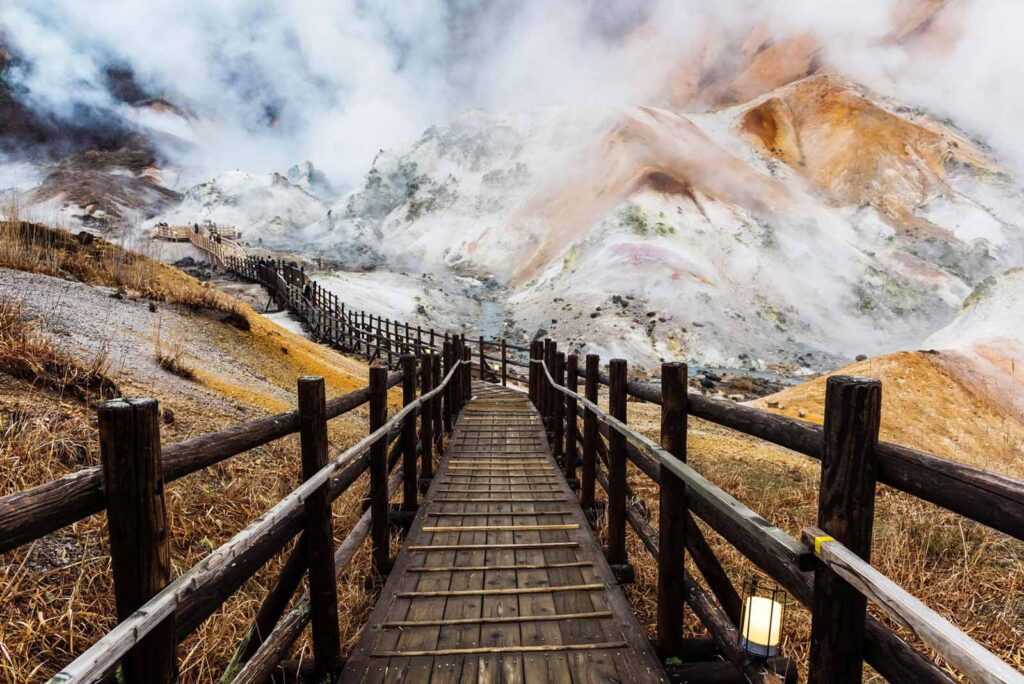
One of the most striking features of Jigokudani is the contrast.
The surrounding mountains are covered in lush green forests during summer and brilliant reds, oranges, and yellows in autumn. Yet the valley itself appears almost lifeless, painted in shades of white, gray, yellow, and rust-orange from volcanic minerals.
As you walk along the wooden boardwalks, you’ll hear:
- Steam hissing from underground vents
- Water bubbling beneath the surface
- Birds singing in the surrounding forest
- The occasional gust of sulfur-scented air
It’s an experience that engages all your senses.
Many visitors compare it to walking through a giant natural laboratory where the earth’s internal forces are constantly on display.
The Famous Boardwalk Trails
The easiest way to explore the valley is via the network of wooden boardwalks that wind through the geothermal area.
The main walking route is relatively short and suitable for most visitors.
Along the trail you’ll encounter:
Steam Vents
Columns of white steam rise continuously from cracks in the earth. Some vents are powerful enough to be seen from across the valley.
Boiling Pools
Several pools bubble vigorously as geothermal gases escape from below.
Sulfur Deposits
Bright yellow sulfur stains parts of the landscape, creating dramatic color contrasts against the white volcanic rock.
Observation Points
Elevated viewpoints provide panoramic views over the entire valley, making them perfect for photography.
Oyunuma: The Mysterious Blue Crater Lake
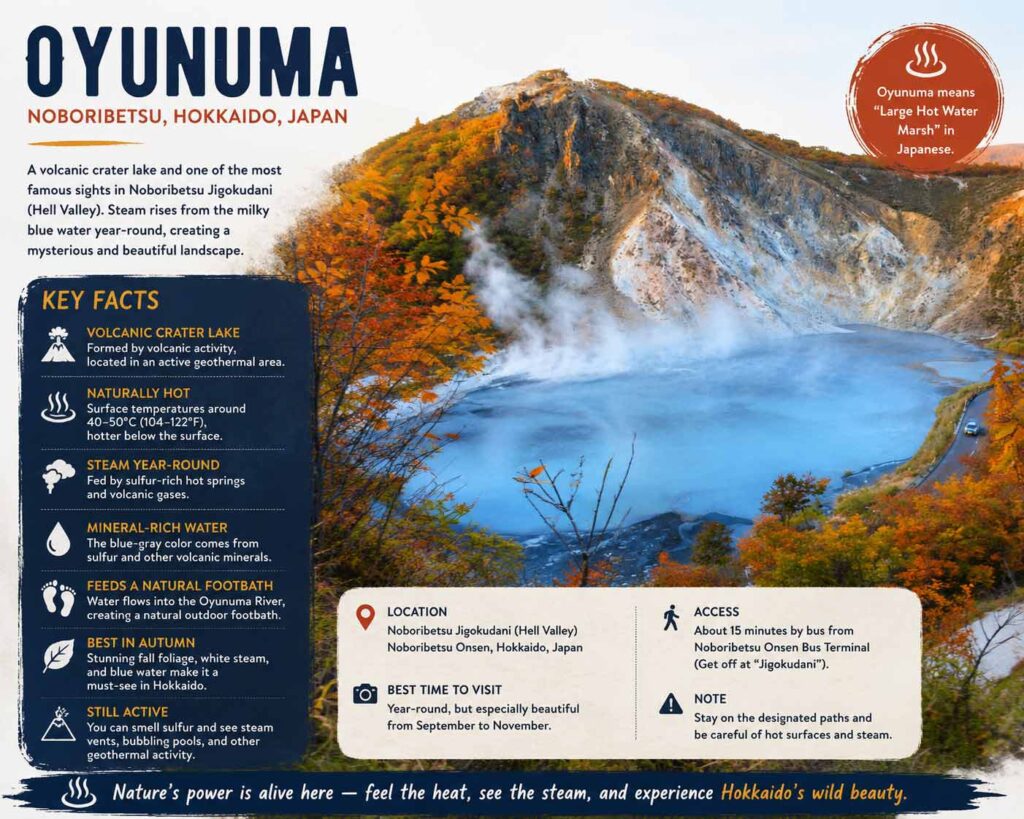
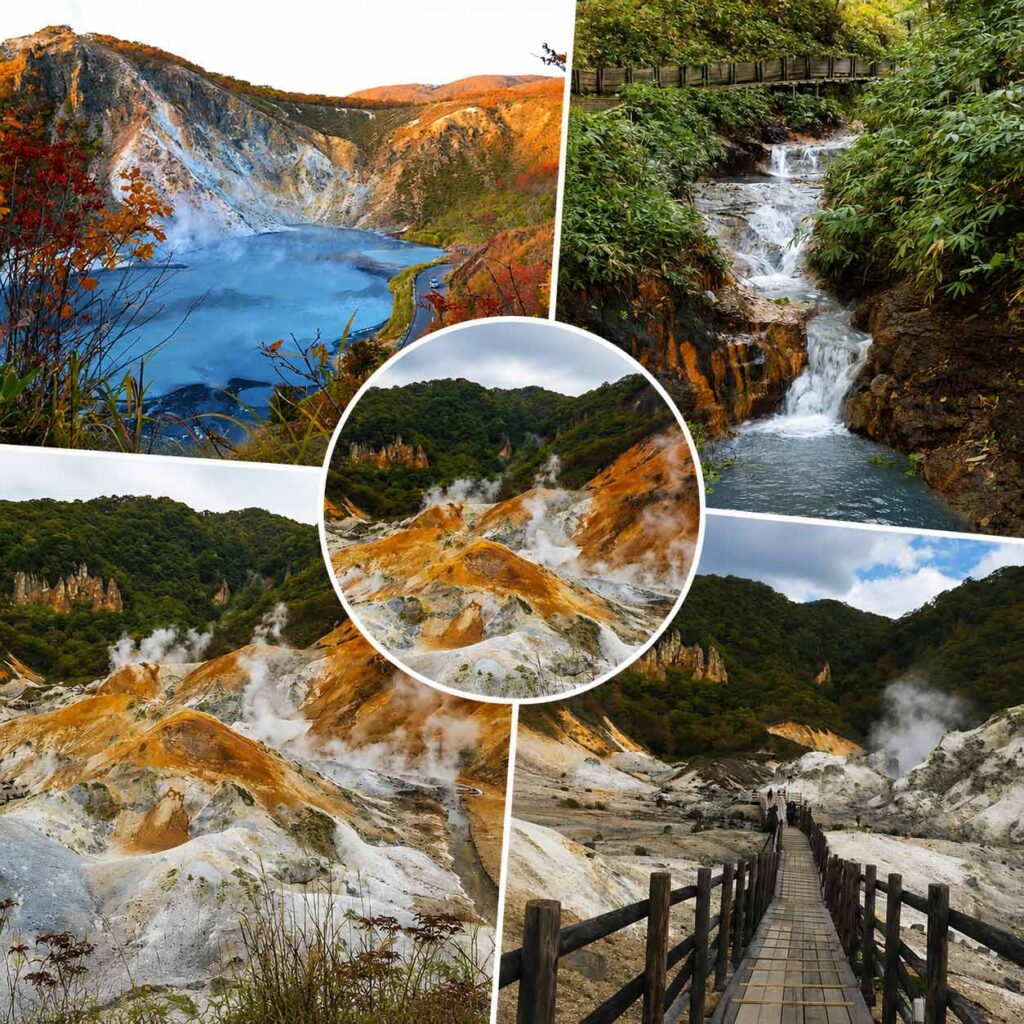
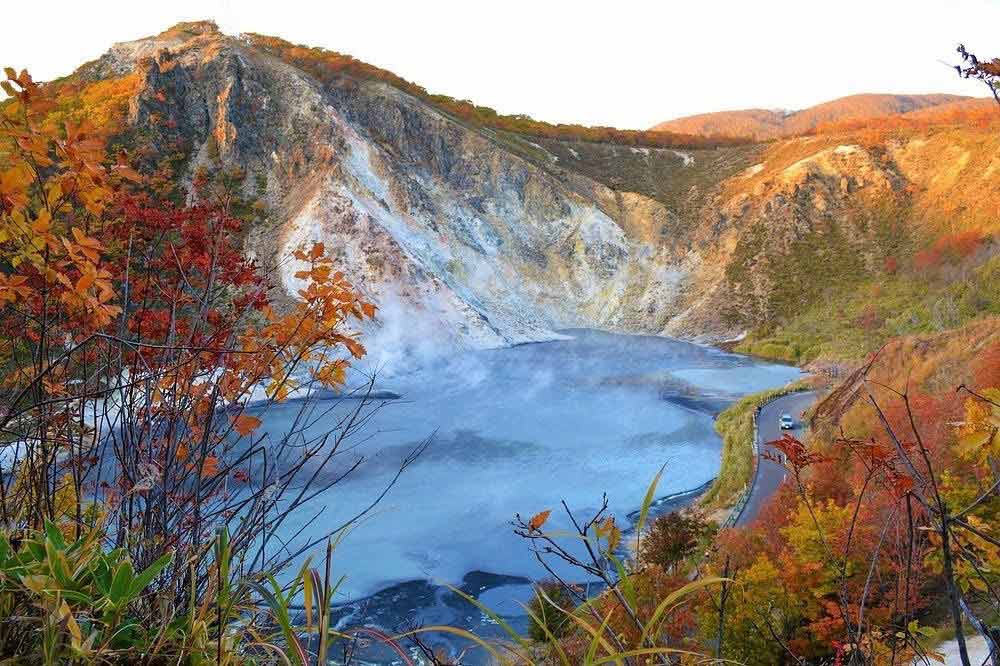
One of the highlights of the area is Oyunuma, a volcanic crater lake located a short walk beyond the main valley.
Oyunuma
The lake’s milky blue-gray water creates one of the most beautiful scenes in Noboribetsu.
What makes Oyunuma unique?
- It’s an active volcanic crater lake.
- Water temperatures can reach around 40–50°C (104–122°F).
- Steam rises year-round from the surface.
- Minerals give the water its distinctive color.
In autumn, the contrast between the blue lake and colorful foliage creates one of Hokkaido’s most photographed landscapes.
Oyunuma River Natural Footbath
Many visitors miss one of the area’s hidden gems.
A pleasant forest trail leads from Oyunuma to the Oyunuma River Natural Footbath.
Oyunuma River Natural Footbath
Here, naturally heated volcanic water flows through a stream in the forest, creating an outdoor footbath unlike any other.
The setting is incredibly peaceful:
- Forest surroundings
- Flowing hot water
- Small waterfalls
- Natural rock formations
Bring a small towel if you plan to soak your feet.
For many visitors, this becomes their favorite part of the entire experience.
Why Noboribetsu’s Hot Springs Are So Special
Noboribetsu is considered one of Japan’s premier hot spring destinations because of its remarkable variety of mineral waters.
The geothermal activity in Jigokudani produces multiple types of spring water, including:
- Sulfur springs
- Iron-rich springs
- Salt springs
- Acidic springs
- Radium-containing springs
These mineral-rich waters are piped directly from the valley to local ryokan and hotels.
After exploring the valley, soaking in an onsen feels especially rewarding because you’re literally bathing in water born beneath the landscape you just walked through.
Best Time to Visit
Summer (June–August)
- Comfortable temperatures
- Lush green scenery
- Excellent hiking conditions
- Less extreme weather
For many travelers, summer is the easiest season to explore.
Autumn (September–October)
This is arguably the most spectacular season.
The colorful foliage transforms the valley into a breathtaking landscape of:
- Fiery red maples
- Golden birch trees
- Orange mountain slopes
- Blue crater lakes
- White volcanic steam
Winter (December–February)
The contrast of snow and steam creates an unforgettable scene.
Snow-covered mountains surround the steaming geothermal valley, making it feel even more dramatic.
Spring (April–May)
Fresh greenery begins to emerge while temperatures remain cool and pleasant.
How to Get There
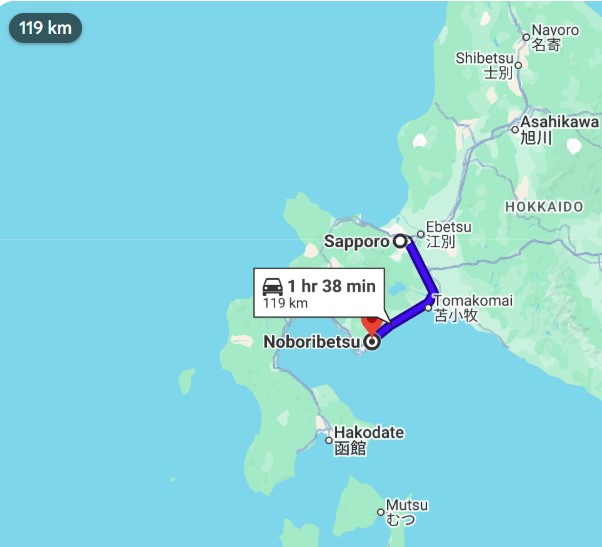
From Sapporo, Noboribetsu is one of the easiest day trips in southern Hokkaido.
By Train
Take the JR Limited Express Hokuto from Sapporo to Noboribetsu Station.
Travel time:
- Approximately 1 hour 15–30 minutes
By Bus
Local buses connect Noboribetsu Station with Noboribetsu Onsen.
Travel time:
- About 15 minutes
Most visitors can comfortably visit the valley as a day trip, though spending a night in an onsen hotel allows you to experience the area after the day-trippers leave.
Is Noboribetsu Worth Visiting?
Absolutely.
Hokkaido has many beautiful lakes, mountains, and flower fields, but few places feel as unique as Noboribetsu Jigokudani.
Where else can you:
- Walk through an active geothermal valley?
- See steam rising directly from the earth?
- Visit a volcanic crater lake?
- Soak your feet in a naturally heated river?
- End the day in one of Japan’s most famous hot spring towns?
For first-time visitors to Hokkaido, Noboribetsu offers one of the most memorable and distinctive landscapes on the island.
Whether you’re visiting in the green days of summer, the fiery colors of autumn, or the snowy beauty of winter, Hell Valley delivers an experience that feels both wild and unforgettable.
If you’re planning a Hokkaido itinerary, Noboribetsu deserves a spot near the very top of your list.